5 places from which to admire Brunelleschi’s Dome
5 min · 11 Oct 2023

The splendid dome of the Cathedral of Santa Maria del Fiore, towering proudly in the Florentine sky, was built between 1420 and 1436 to a design by Filippo Brunelleschi and still enchants anyone who observes it from afar. At the time of its construction it was the largest dome in the world and remains to this day the largest masonry vault ever built. It has a diameter of 45.50 metres and rises on a drum placed 54 metres above the ground, reaching a height of 116 metres (including the 22 metres of the top lantern). Everyone knows it but few know that there are some special (and easily accessible) places from which to admire it from a privileged position. Here are five of them!
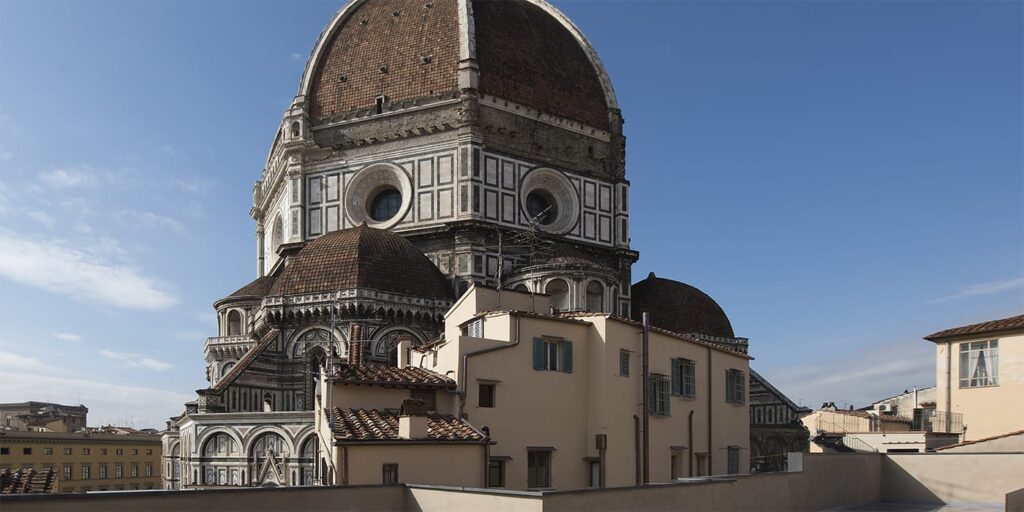
The Terrace of the Opera del Duomo Museum
Established in 1891 and radically renovated in 2015, the Museo dell’Opera del Duomo is one of the most important museums in the world, both for the richness and quality of its collections and for the architectural and technological avant-garde of its rooms. It houses over 750 works of art from the monumental complex of the Opera di Santa Maria del Fiore, including extraordinary masterpieces such as Michelangelo’s Pietà Bandini and Donatello’s Penitent Magdalene. On the third floor of the museum is the panoramic Brunelleschian Terrace overlooking the cathedral and the city, from where a breathtaking (and close-up) view of Brunelleschi’s dome can be enjoyed. The terrace, accessible by stairs or lift, is designed as the final stop on the museum tour.
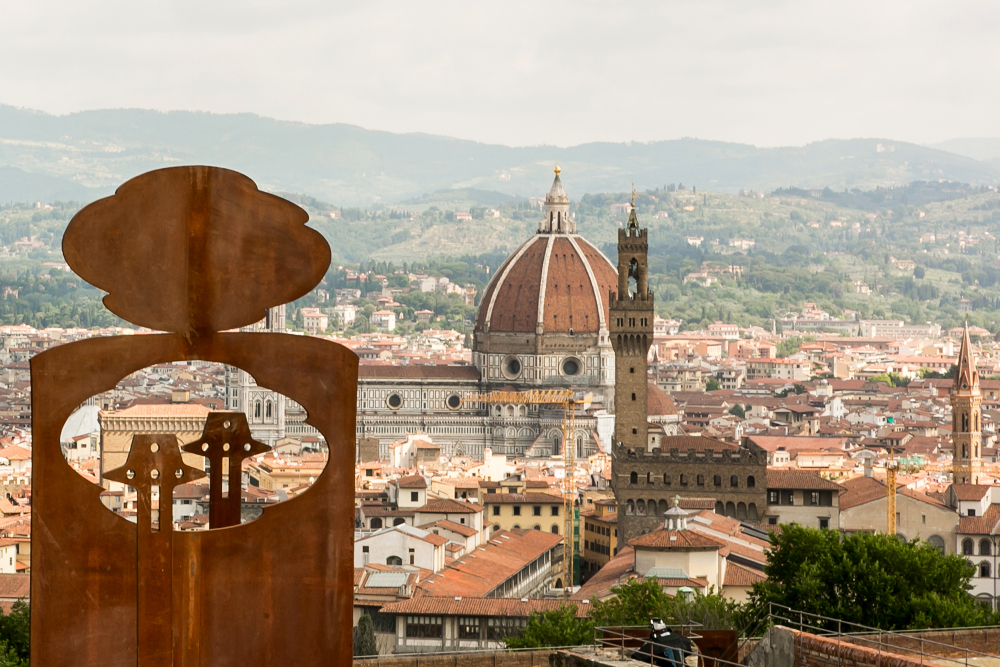
The Belvedere Fort
Another place from which to observe (from a privileged position) Brunelleschi’s dome is the Fortezza di Santa Maria in San Giorgio del Belvedere, better known as Forte Belvedere. Situated on top of the Boboli hill, it offers an unparalleled view of Florence (and of course of the dome). In addition to being one of the city’s most scenic spots, the fort is a fine piece of architecture built between 1590 and 1595 to designs by Bernardo Buontalenti, one of the most emblematic artists of Mannerist art. The structure is dominated by the elegant Palazzina di Belvedere, probably designed by Bartolomeo Ammannati around 1570. Today, Forte Belvedere is a venue for exhibitions and aperitifs. N.B. It is closed in winter.
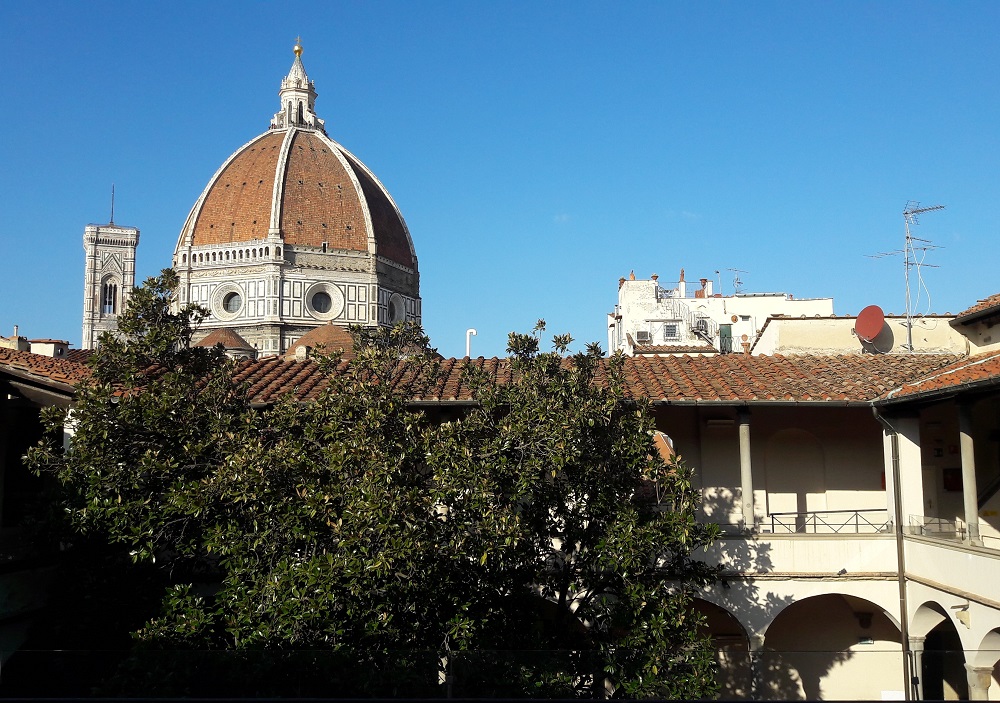
The Oblate Library
In the heart of the city, just a few steps from Piazza Duomo, is the Oblate Library, inaugurated in May 2007. It is located in the evocative 14th-century former convent of the Oblate (from which it takes its name), a complex that has experienced multiple functions over the last century. To call it a library is reductive. Although it contains a rich heritage of works, it is mainly a meeting place where events and initiatives for all ages take place. Among the most valuable rooms of the complex is the elegant cloister, on the top of which is a panoramic terrace with a cafeteria, from which one can admire an enchanting view of Brunelleschi’s dome.
The Parnassus Gardens
Just a few minutes’ walk from Piazza della Libertà is a large 19th-century garden, which often escapes the attention of tourists. This green space is the Garden of Horticulture. The highest part of the park houses the Orti del Parnaso (with access from Via Trento) and a splendid panoramic terrace from which you can enjoy an unusual view of the dome. The Orti del Parnaso are also known as the ‘gardens of the dragon’ because of a curious statue-fountain, completed in 1990 to a design by Marco Dezzi Bardeschi, depicting the mythological animal.
The terraces of the Cathedral of Santa Maria del Fiore
At the height of the roof of the aisles of the cathedral, more than thirty metres above the ground, runs a walkway with a gallery externally decorated with a marble balustrade pierced with quadriboli. A long section of this walkway is open for visits. Not to be missed is the walkway on the north terrace, which allows a unique view of Brunelleschi’s dome. One can even see the marble details of the rosettes of the ‘eyes’ of the dome drum and all the marble cladding of the sides.
Photo gallery (1) © Opera di Santa Maria del Fiore | (2 e 3) © Cultura – Comune di Firenze