Tuscany’s ghost towns not to be missed
6 min · 26 Aug 2024
Tuscany hides several ghost towns, abandoned over time for different reasons. They are so called because only spirits have often remained to inhabit them. In most cases, they are evocative and magical places that offer glimpses of past life. Let’s discover together the ghost towns in Tuscany not to be missed.
Toiano
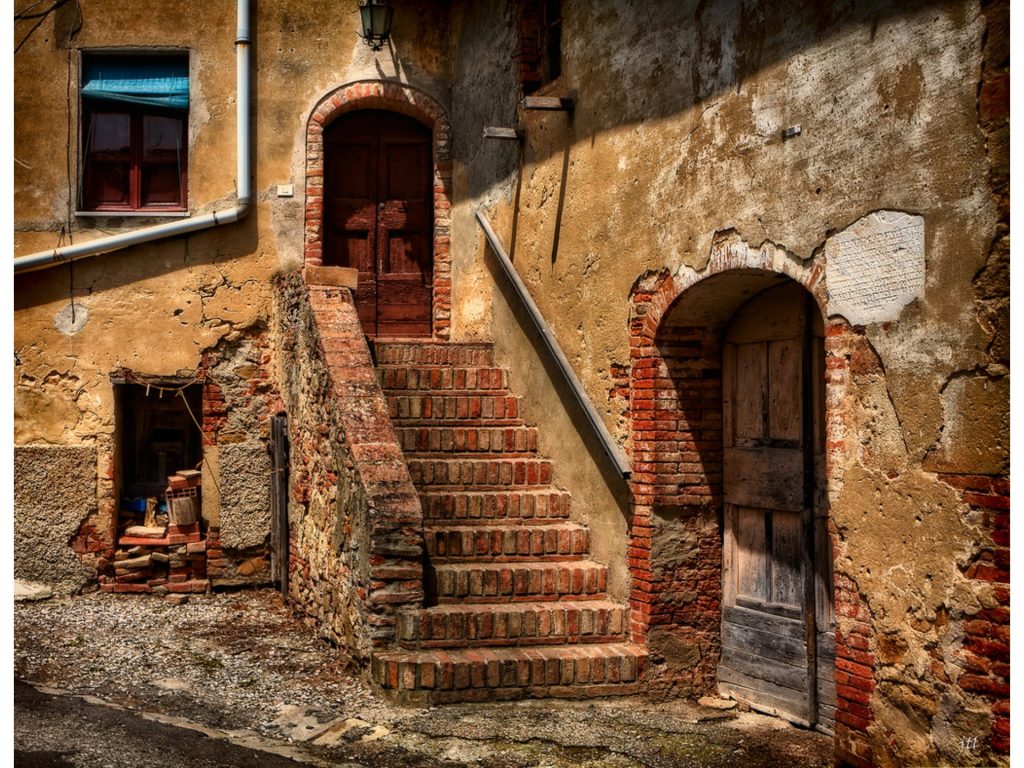
Toiano is among the most famous ghost towns in Italy. A hamlet of the municipality of Palaia, it is located on the sandstone tuff hills between Pisa and Volterra. Its origins date back to the Middle Ages, when it was a castle disputed between Lucca, Pisa and Florence. It began to depopulate in the last century, due to the growing demand in the city for factory workers. Today it is practically uninhabited. It has no bar, no hotels or shops, no banks, no offices or grocery shops, just a small church, now deconsecrated, dedicated to St John the Baptist and a small cemetery. It develops around a single street, the Via del Castello, about 50 metres long, lined with houses in various states of disrepair (some have been renovated). Its charm even interested the well-known photographer Oliviero Toscani, who once organised a photographic competition to make every corner of it indelible. The village is also sadly remembered for the murder in 1947 of Elvira Orlandini, known as ‘bella Elvira’, a young 20-year-old girl whose throat was found slit in the woods and whose killing triggered a media case.
Brento Sanico
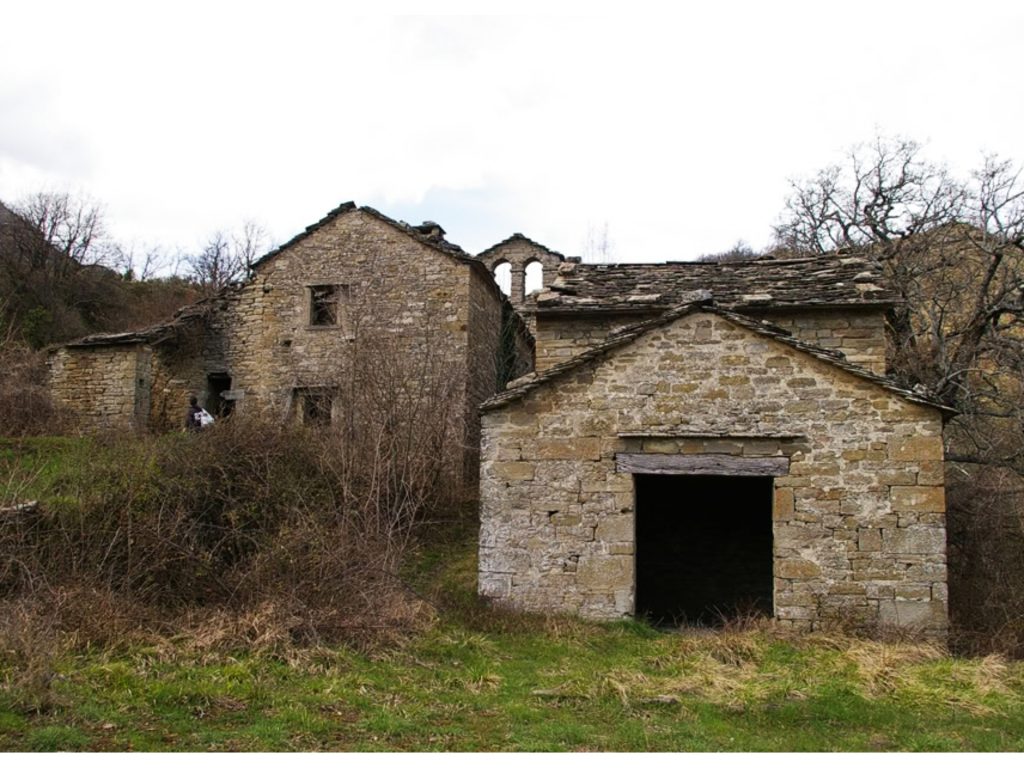
Situated amidst a dense forest in the heart of the Tuscan-Romagna Apennines, Brento Sanico is a hamlet in the municipality of Firenzuola that has remained abandoned despite its history and rich artistic heritage. Its origins date back to the first half of the 12th century and was a stronghold of the Ubaldini di Susinana. It has been abandoned since the 1960s, when the last recorded family moved to the valley. The decline of Brento is due to the construction of modern motorways and highways, which have deprived the village of its strategic importance. The village is currently in a state of ruins with the exception of the ancient Church of San Biagio, of which there are records dating back to the 10th century and which has remained in good condition. Studies carried out by Professor Tagliaferri, author of the book ‘Firenzuola e il suo territorio’ (Firenzuola and its territory), show that beneath the straw-yellow hue that characterises the building’s interior, there are well-preserved frescoes dating back to the 15th-16th century.
Bugnano
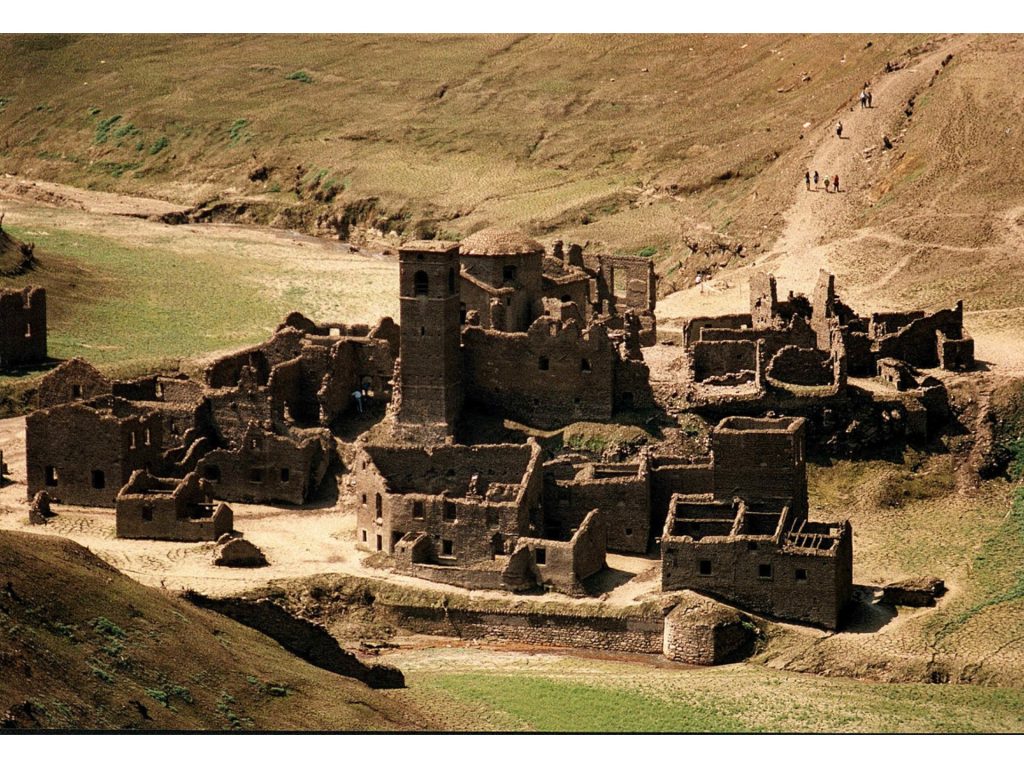
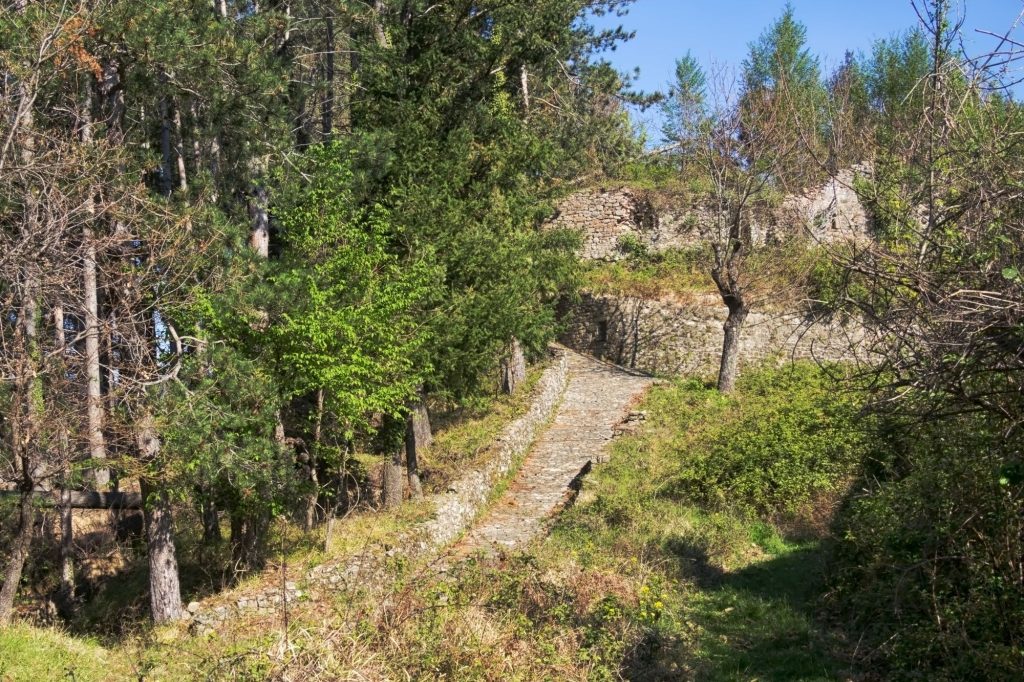
In the municipality of Bagni di Lucca, hidden by thick vegetation, lies the ghost town of Bugnano. Situated almost 600 metres above sea level, it was one of the three inhabited nuclei, together with Lugnano and Riolo, belonging to the hillside locality known as Monti di Villa. The first official documents attesting to the existence of Bugnano (some parchments) date back to 983 AD, but other sources indicate that the area was inhabited centuries earlier. Its decline began in 1832, presumably due to its unfavourable location and difficult accessibility, but the last residents only abandoned it in the 1980s. The village is completely shrouded in vegetation and the devastated appearance of the houses makes the place particularly picturesque. To reach Bugnano, one must take a small path in the middle of the forest that winds its way from the asphalt road coming from the village of Monti di Villa.
Bergiola
Also in the province of Lucca, in the municipality of Minucciano, is the small medieval village of Bergiola, totally abandoned and reduced to the state of ruins. Its history developed over the centuries without any particular problems until 7 September 1920, when a devastating earthquake struck the entire Garfagnana and the village was completely destroyed. The last families living there, given the damage suffered by the houses, decided to move. As the years passed since that tragic event, the vegetation became thick and it was difficult even to reach the village, but today, thanks to some restoration work, it is possible to appreciate a stretch of paved road, the remains of some houses and the castle walls, a small church and a well. According to a legend, the well is the refuge of a monstrous snake called ‘Devasto’, which at night feeds on the dead in the cemetery of Pieve San Lorenzo.
Castelnuovo dei Sabbioni
The village of Castelnuovo dei Sabbioni is a hamlet of the municipality of Cavriglia, which stands on the slope of the Chianti hills towards Valdarno. An important mining basin for the extraction of lignite (currently exhausted) was active in this area for a long time. The incessant digging undermined the safety of the hill (frequent landslides) and it was for this reason that Castelnuovo dei Sabbioni was abandoned in the 1970s. Today, the centre of the village remains with its main square, a church and some houses almost completely covered by vegetation. It also houses the MINE – Museo delle Miniere e del Territorio di Cavriglia (Museum of Mining and the Territory of Cavriglia), which collects artefacts and documents from the local mine, as well as various objects related to excavation activities. A small curiosity: Castelnuovo dei Sabbioni was chosen in 1995 as a film set by Tuscan actor and director Alessandro Benvenuti when he shot the film ‘Ivo il tardivo’.
Photo Gallery © (1) Jason OX4 – (2) Joaovieirapinto – (3) Robyfra1